
Studying abroad is one of the most transformative decisions a student can make, but the cost of tuition, housing, travel, and living expenses often stands in the way. Fortunately, dozens of governments, universities, and international organizations have built fully funded scholarship programs specifically designed to remove that financial barrier for talented international students. These programs cover tuition fees, monthly stipends, airfare, health insurance, and sometimes even research or relocation grants.
This guide breaks down the most respected fully funded scholarship programs in the world, explains what “fully funded” actually means, and walks through practical steps for building a competitive application. Whether you’re a high school graduate exploring undergraduate options or a working professional eyeing a master’s or PhD, this guide will help you understand where to look and how to position yourself for success.
What Does “Fully Funded” Actually Mean?
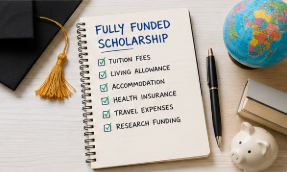
Before diving into specific programs, it’s worth clarifying what the term “fully funded” covers, because scholarship packages vary widely. A genuinely fully funded scholarship typically includes:
- Tuition fees – full or near-full coverage of academic costs
- Monthly stipend – a living allowance for housing, food, and daily expenses
- Travel costs – round-trip flights between the student’s home country and the host country
- Health insurance – mandatory coverage for the duration of study
- Visa and settlement support – application fees, arrival allowances, and sometimes resettlement grants
Some scholarships also add extras such as research funding, professional development workshops, language courses, or a departure allowance when the program ends. Always read the official scholarship terms carefully, since some “full scholarships” only cover tuition and expect students to fund their own living costs — that’s a partial scholarship, not a fully funded one.
Government-Funded Scholarship Programs
Government-sponsored scholarships tend to be the most generous and prestigious, since they’re backed by national budgets and diplomatic goals. Here are the flagship programs recognized worldwide.
1. Chevening Scholarships (United Kingdom)
Chevening is the UK government’s global scholarship program, <cite index=”1-1,3-1″>funded by the Foreign, Commonwealth and Development Office and open to outstanding international leaders pursuing a one-year master’s degree in the UK</cite>. <cite index=”2-1″>The award is fully funded, covering tuition fees, a monthly stipend, travel costs, visa expenses, and additional allowances</cite>, and <cite index=”2-1″>also includes an arrival allowance, a homeward departure allowance, and funding to cover a visa application</cite>.
<cite index=”2-1″>For the 2026–2027 academic year, more than 1,500 scholarships are being offered across more than 50 partner universities in the UK</cite>, and <cite index=”3-1″>the program invites applicants from more than 160 countries and regions</cite>, with <cite index=”3-1″>the scholarship having grown since its launch in 1983 into one of the UK’s flagship international education schemes</cite>.
To qualify, candidates generally need an undergraduate degree, at least two years of relevant work experience, and a genuine plan to return home and apply their new skills. Chevening is highly competitive — <cite index=”5-1″>only around 2–3% of applicants are ultimately selected</cite> — so a well-crafted personal statement demonstrating leadership potential and a clear career vision is essential.
2. Fulbright Foreign Student Program (United States)
The Fulbright Program is one of the most recognized names in international education, funded by the U.S. Department of State and administered through bi-national Fulbright Commissions and the Institute of International Education (IIE) in countries without a commission. It supports graduate students, young professionals, and artists from over 160 countries pursuing master’s or PhD study at accredited U.S. institutions.
Fulbright awards typically cover tuition, airfare, a living stipend, health insurance, and sometimes a small research or professional development allowance. Selection emphasizes academic merit, leadership qualities, and a commitment to cultural exchange and mutual understanding between the U.S. and the applicant’s home country. Applications are usually submitted through the local Fulbright Commission or U.S. embassy in the student’s home country roughly a year before the intended start date.
3. DAAD Scholarships (Germany)
The German Academic Exchange Service (DAAD) runs one of the largest scholarship networks in the world, funding thousands of international students annually at German universities. DAAD scholarships span undergraduate, master’s, PhD, and postdoctoral levels and are available across nearly every academic discipline, from engineering to development studies.
A DAAD scholarship generally includes a monthly stipend, health insurance, travel allowance, and sometimes a research or study allowance. Because many German public universities already charge little to no tuition for international students, DAAD funding is often used to cover living costs and research expenses rather than tuition itself — but for programs where tuition applies, DAAD funding covers that too. Germany’s growing catalog of English-taught master’s programs has made DAAD scholarships especially attractive to students who don’t yet speak German fluently.
4. Australia Awards Scholarships
Funded by the Australian government, Australia Awards Scholarships target students from partner countries in the Indo-Pacific region, Africa, and the Middle East. The program funds full tuition, return airfare, a establishment allowance, a contribution to living expenses, overseas student health cover, and academic support such as pre-course English training when needed.
Australia Awards prioritizes applicants whose field of study aligns with development priorities in their home country — think agriculture, public health, education, or governance — making it a strong fit for students planning to return home and work in the public or nonprofit sector.
5. MEXT Scholarships (Japan)
The Japanese Ministry of Education, Culture, Sports, Science and Technology (MEXT) offers fully funded scholarships for undergraduate, research, and graduate students at Japanese universities. Benefits typically include full tuition waivers, a monthly stipend (which varies by program level), round-trip airfare, and sometimes a Japanese language preparation course before the academic program begins.
MEXT scholarships are distributed through Japanese embassies worldwide or directly through partner universities under the “University Recommendation” route. Competition varies significantly by country and subject area, and strong Japanese or English language proficiency (depending on the program) is often required.
6. Türkiye Bursları (Turkey Scholarships)
Türkiye Bursları is a highly comprehensive government scholarship covering tuition, accommodation, monthly stipend, health insurance, a one-year Turkish language course, and round-trip flights. It’s open to students from virtually every country in the world, at bachelor’s, master’s, and PhD levels, and is known for having a comparatively higher acceptance rate than many Western equivalents while still funding a full academic package.
7. Swiss Government Excellence Scholarships
Aimed primarily at postgraduate researchers and PhD candidates, the Swiss Government Excellence Scholarships fund study at Swiss universities and research institutions. The package includes a monthly stipend, tuition waiver at many partner institutions, health insurance contribution, and sometimes a research or travel allowance. These scholarships are smaller in number but well-suited to students with a strong existing research profile.
University-Funded Full-Ride Scholarships
Beyond government programs, many individual universities offer their own fully funded scholarships, particularly for students with outstanding academic records or unique circumstances.
Ivy League and Need-Blind U.S. Universities
A number of elite U.S. universities — including Harvard, Yale, Princeton, MIT, and a handful of other well-resourced institutions — practice “need-blind” admissions for international students combined with a promise to meet 100% of demonstrated financial need. In practice, this means an admitted international student from a low-income background could receive a package covering full tuition, room, board, and even travel costs, without any loan requirement. These aren’t labeled “scholarships” in the traditional sense; they’re financial aid packages, but the effect is the same: a fully funded education. The trade-off is that admission itself is extremely competitive, often with acceptance rates in the low single digits.
Rhodes Scholarship (University of Oxford)
One of the oldest and most prestigious scholarships in the world, the Rhodes Scholarship funds two to three years of graduate study at the University of Oxford. It covers tuition, a generous living stipend, and additional grants for travel and research. Selection is based on academic excellence, character, leadership, and commitment to service, and the program draws applicants from dozens of eligible countries through country-specific selection committees.
Gates Cambridge Scholarship (University of Cambridge)
Funded by the Bill and Melinda Gates Foundation, this scholarship supports outstanding international graduate students pursuing a full-time postgraduate degree at Cambridge. It covers tuition fees, a maintenance allowance, and additional funding for discretionary costs such as conference travel or fieldwork. The program looks for applicants with outstanding intellectual ability, leadership potential, and a commitment to improving the lives of others.
Erasmus Mundus Joint Master Degrees (European Union)
Erasmus Mundus is the European Union’s flagship scholarship scheme for joint master’s programs delivered by consortiums of universities across multiple European countries. Selected students receive full tuition coverage, a monthly living allowance, travel and installation costs, and insurance, while studying in at least two different European countries as part of a single degree. Because the program is run through hundreds of individual joint master’s programs, students can search by subject area — from data science to human rights — and apply directly through the specific program’s consortium.
Regional and Subject-Specific Scholarship Programs
Some fully funded opportunities are tied to particular regions or fields of study, which can make them less competitive for students in the right category.
- Commonwealth Scholarships – funded by the UK government for students from Commonwealth countries, particularly in developing nations, covering master’s and PhD study.
- Joint Japan/World Bank Graduate Scholarship Program – aimed at students from World Bank member developing countries pursuing development-related master’s degrees.
- Islamic Development Bank Scholarships – supports students from IsDB member countries across science, technology, and various academic fields.
- Vanier Canada Graduate Scholarships – funds doctoral students in Canada with a focus on leadership and research excellence.
- KAAD, Aga Khan Foundation, and Ford Foundation International Fellowships – smaller but well-regarded programs targeting specific regions or leadership pipelines.
How to Find Legitimate Fully Funded Scholarships
With so many scholarship “opportunities” advertised online, it’s important to know how to separate real, fully funded programs from scams or exaggerated marketing claims. Keep these principles in mind:
- Go to the official source first. Government scholarship programs and universities always publish full eligibility criteria, deadlines, and benefits on their official
.gov,.edu, or institutional websites. Third-party scholarship blogs can be useful for guidance, but always cross-check details against the primary source before applying. - Be wary of upfront fees. Legitimate fully funded scholarships never ask applicants to pay a processing fee to be considered. If a “scholarship” asks for payment before an offer is made, treat it as a red flag.
- Check the funding breakdown. A truly fully funded scholarship will explicitly list tuition, stipend, and travel coverage. If a program only mentions “tuition waiver” without addressing living costs, it may only be a partial scholarship.
- Note application windows carefully. Programs like Chevening, Fulbright, and DAAD open applications many months before the academic year begins, and missing a deadline usually means waiting a full year for the next cycle.
- Use your university’s international office. Many universities maintain updated lists of both inbound and outbound scholarship opportunities and can help verify legitimacy.
Building a Competitive Scholarship Application
Fully funded scholarships attract enormous applicant pools, so standing out requires more than good grades. Based on the common threads across top programs, here’s what selection committees consistently look for:
A clear, specific purpose. Vague statements like “I want to study abroad to broaden my horizons” rarely succeed. Committees want to see a specific academic or professional goal, a reason that particular country or university is the right fit, and a plan for what happens after graduation.
Demonstrated leadership, not just claimed leadership. Rather than stating “I am a natural leader,” strong applications describe concrete examples: leading a student organization, managing a community project, or driving change within a workplace.
Alignment with the program’s mission. Programs like Chevening and Australia Awards are explicitly designed to build future leaders who will return home and contribute to their country’s development. Applications that show genuine intent to give back — rather than simply using the scholarship as a pathway to permanent migration — tend to perform better in interviews and essay review.
Strong, specific letters of recommendation. Recommenders who know the applicant well and can speak to specific achievements carry far more weight than generic praise from a senior figure who barely knows the student.
Well-prepared language test scores. Whether it’s IELTS, TOEFL, or a language proficiency test for a non-English program, submitting scores well before the deadline avoids last-minute disqualification — a surprisingly common and avoidable mistake.
Financial and academic documentation ready in advance. Transcripts, degree certificates, and proof of work experience often require translation or certification, which can take weeks. Starting this process early prevents a strong application from being rejected on a technicality.
Common Mistakes That Sink Strong Candidates
Even highly qualified applicants are frequently rejected due to avoidable errors:
- Applying to too many programs superficially instead of tailoring one or two strong applications to the scholarships that best match their profile.
- Missing the “why this country” or “why this university” question, which committees use to filter out applicants who haven’t done real research.
- Underestimating the interview stage. Programs like Chevening and Fulbright include structured interviews, and candidates who haven’t rehearsed answers about their goals, leadership examples, and post-scholarship plans often struggle under pressure.
- Ignoring the “return home” commitment. Several government-funded scholarships require recipients to return to their home country for a minimum period after graduation. Applicants who appear more interested in permanent relocation than in the program’s development goals are less likely to be selected.
- Waiting until the deadline week to start. Strong applications typically take two to three months to prepare properly, including essay drafts, recommendation requests, and document collection.
A Realistic Timeline for Applying
For most major scholarships with a fall intake, a rough planning timeline looks like this:
- 12–14 months before intake: Research programs, shortlist universities, and confirm eligibility requirements.
- 9–12 months before intake: Take required language tests (IELTS/TOEFL), request transcripts, and begin drafting personal statements.
- 6–9 months before intake: Submit applications (most major scholarship deadlines fall in this window), request recommendation letters early to give referees enough time.
- 3–6 months before intake: Attend interviews if shortlisted, prepare visa documentation, and begin looking into housing and pre-departure logistics.
- 0–3 months before intake: Finalize visa, arrange travel, and complete any pre-arrival orientation or language courses required by the scholarship.
Frequently Asked Questions
Are fully funded scholarships only available for master’s and PhD study? No. While many of the most famous programs — Chevening, Fulbright, Rhodes, Gates Cambridge — focus on graduate study, fully funded undergraduate opportunities also exist. MEXT offers undergraduate tracks, several U.S. universities provide need-blind aid packages to undergraduates, and country-specific programs in places like Turkey, Hungary (Stipendium Hungaricum), and China (Chinese Government Scholarship) fund bachelor’s degrees as well.
Do I need to already speak the language of the host country? It depends on the program and the language of instruction. Many European and Asian countries now offer English-taught degree programs specifically to attract international students, so fluency in the local language usually isn’t required for admission — though some scholarships, like MEXT or Türkiye Bursları, include a language preparation year for students who need it before starting their main coursework.
Is work experience required to apply? For many graduate-level government scholarships, yes. Chevening, for example, generally expects at least two years of relevant work experience. Purely academic scholarships aimed at younger applicants, such as many undergraduate or early PhD programs, typically place more weight on academic performance and potential rather than professional history.
Can I apply for more than one fully funded scholarship at the same time? In most cases, yes — there’s usually no rule against applying to multiple scholarship programs simultaneously, as long as you meet each program’s individual eligibility requirements. However, some scholarships require you to withdraw from other funding offers once you accept theirs, so it’s worth reading the terms and conditions of each award carefully rather than assuming you can stack multiple full scholarships for the same degree.
How competitive are these scholarships really? Extremely competitive, particularly at the graduate level. Acceptance rates for programs like Chevening or Rhodes are often in the low single digits. That said, competitiveness varies significantly by country of origin and field of study — some programs receive far fewer applications from certain regions or disciplines, which can meaningfully improve an individual applicant’s odds.
Do fully funded scholarships cover dependents, such as a spouse or children? Some do, though it’s far from universal. A handful of programs, particularly longer PhD scholarships, provide a limited dependent allowance or assistance with family visas. This is one of the details that varies the most between programs, so applicants who plan to bring family members abroad should check this specific point on the official scholarship page rather than assuming coverage.
What happens if I don’t get selected on my first attempt? Reapplying is common and often successful. Many scholars who now hold prestigious awards like Chevening or Fulbright applied more than once before being selected, using feedback from unsuccessful interviews or essay drafts to strengthen their next application. Persistence, combined with genuine improvement between cycles, is viewed favorably rather than as a weakness.
Are online-only or short-term programs ever fully funded? Fully funded scholarships are almost always tied to full-time, in-person degree programs, since the funding is meant to offset the real cost of relocating and studying abroad. Short courses, online certificates, and exchange semesters sometimes receive partial funding or travel grants, but rarely the complete package associated with degree-length scholarships.
Final Thoughts
Fully funded scholarships remain one of the most powerful tools for making world-class education accessible regardless of financial background. Programs like Chevening, Fulbright, DAAD, Australia Awards, MEXT, the Rhodes Scholarship, and Erasmus Mundus each have their own strengths, eligibility rules, and selection philosophies, but they share a common thread: they reward applicants who can clearly articulate a purpose, demonstrate real leadership experience, and show how their education will create impact beyond their own career.
The most successful applicants treat the scholarship search as a long-term project rather than a last-minute application. Start early, verify every detail against the scholarship’s official website, and build an application that tells a coherent, specific story about who you are and where you’re headed. With careful preparation, a fully funded education at a world-class institution is a realistic and achievable goal for thousands of students every year.
This article is for general informational purposes. Scholarship eligibility criteria, deadlines, and funding amounts change periodically always confirm current details on the official scholarship or university website before applying.